
Emily Kikta is an American ballet dancer, choreographer, and filmmaker best known as a soloist with New York City Ballet (NYCB). Recognized for her powerful technique, long lines, and confident stage presence, she has performed leading roles in works by George Balanchine and other major choreographers.
But there’s more to Emily than ballet performances. She’s also a creative filmmaker with a background in several dance styles. Let’s explore her story.
Emily Kikta’s Biography
Here are some quick facts about Emily Kikta, including her background, family, and professional career.
- Real Name: Emily Kikta
- Age: Reported as 33 in March 2026 (exact birth date not publicly confirmed)
- Birthplace: Pittsburgh, Pennsylvania, USA
- Nationality: American
- Profession: Ballet dancer, choreographer, filmmaker
- Dance Style: Classical ballet, neoclassical ballet, contemporary ballet
- Height: 5 feet 10 inches (178 cm)
- Mother: Ballet teacher
- Father: Classical guitarist
- Siblings: Three older brothers
- Husband: Peter Walker, New York City Ballet principal dancer
- Dance Company: New York City Ballet
- Current Rank: Soloist
Emily Kikta Net Worth
Emily Kikta’s net worth has not been publicly confirmed by any reliable financial source.
Her professional work includes performing with New York City Ballet, choreographing, and producing dance films through KW Creative, the production company she founded with her husband.
These activities provide potential sources of income, but there isn’t enough verified information to calculate her earnings or total wealth accurately.
Emily Kikta Personal Life
Emily Kikta comes from a creative family. Her mother teaches ballet, while her father is a classical guitarist. She also has three older brothers.

Her husband, Peter Walker, is a principal dancer with New York City Ballet. The couple knew each other as students at the School of American Ballet before eventually becoming romantic partners.
In a 2024 interview with Pointe Magazine, Emily shared that she and Peter enjoyed cooking and spending time at home with their cat, Lupin.
Early Life
Emily Kikta was born in Pittsburgh, Pennsylvania, where dance was part of her everyday life almost from the beginning.
Her mother worked as a ballet teacher, so Emily spent much of her childhood around dance studios. Being surrounded by music and movement helped her develop an early connection with performing.
But her childhood training wasn’t limited to classical ballet.
At the Thomas Studio of Performing Arts in Pittsburgh, Emily participated in a competition-focused program that introduced her to jazz, tap, lyrical dance, hip-hop, gymnastics, rhythmic gymnastics, and baton twirling.
That’s quite a mix for someone who would eventually become a professional ballerina!
Learning so many styles gave her experience with different rhythms, movement qualities, and performance techniques. It also helped her become comfortable trying unfamiliar choreography.
Despite enjoying this variety, Emily became particularly interested in ballet and its demanding technical structure.
She continued developing her classical technique at the Ballet Academy of Pittsburgh.
In 2006, Emily attended a summer course at the School of American Ballet, the official training school of New York City Ballet.
That experience brought her closer to professional ballet, and in 2008 she moved to New York City to study there full-time.
The Way to Become a Professional Dancer
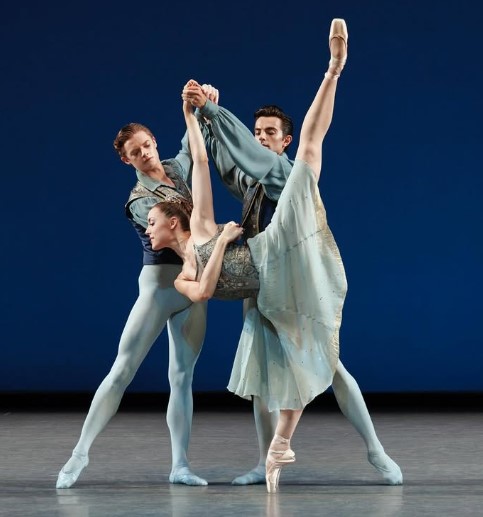
Moving from Pittsburgh to New York City was an important turning point in Emily Kikta’s career.
At the School of American Ballet, she trained in an environment closely connected to one of America’s most respected ballet companies.
The transition required serious commitment. Ballet was no longer simply something she loved doing; it was becoming her future profession.
In October 2010, at age 17, Emily became an apprentice with New York City Ballet.
She had graduated from high school early and also began taking classes at Fordham University, where she studied communications and media.
In August 2011, she officially joined NYCB’s corps de ballet.
However, professional life wasn’t always easy.
Emily had difficulty adjusting to the competitive environment and experienced repeated ankle injuries during her early career.
In 2015, a serious injury threatened her ability to continue dancing at the same level. Her recovery required surgery, rehabilitation, and a renewed focus on her overall well-being.
Rather than abandoning ballet, she worked toward returning stronger and more confident.
The Breakthrough
Emily Kikta’s biggest career breakthrough came in January 2022, when New York City Ballet promoted her to soloist.
The promotion followed more than a decade of company experience, including years of injury setbacks and demanding ensemble performances.
It also came after the COVID-19 pandemic interrupted live performances and gave her time to reconsider her professional goals.
During that period, Emily continued studying, developing film projects, and maintaining her connection with dance.
Becoming a soloist gave her more opportunities to perform featured roles and demonstrate her individual stage presence.
For sure, this promotion marked an important new chapter in her ballet career.
The Journey to Success
Following her promotion, Emily expanded her repertoire with several notable New York City Ballet performances.
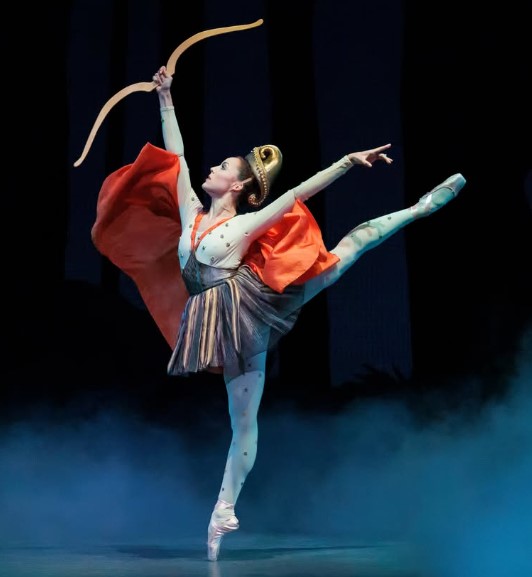
Her featured roles have included the Sugarplum Fairy and Dewdrop in George Balanchine’s The Nutcracker, Polyhymnia in Apollo, and the tall girl in Rubies from Jewels.
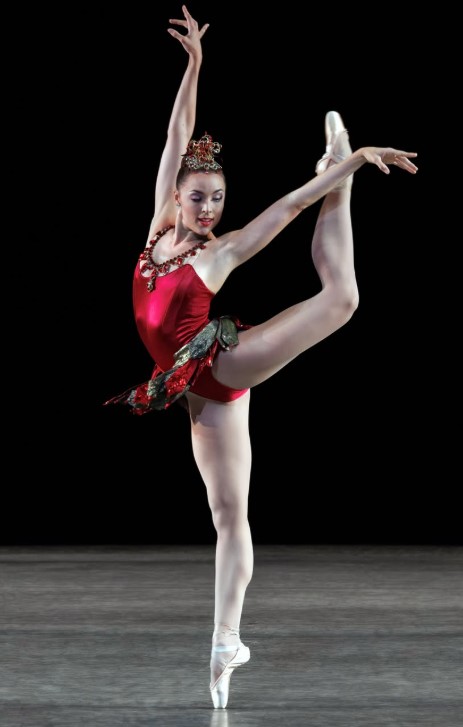
She has also appeared in Western Symphony, The Four Temperaments, Brahms-Schoenberg Quartet, and A Midsummer Night’s Dream.
Beyond Balanchine’s choreography, Emily has performed works by Jerome Robbins, Justin Peck, Alexei Ratmansky, and other contemporary choreographers.
Her career also includes creating original roles in productions such as Kyle Abraham’s Love Letter (on shuffle) and Sidra Bell’s Suspended Animation.
Away from performing, she earned an MBA from Pace University and continued developing her interests in filmmaking and choreography.
These experiences have helped her build a professional identity that extends beyond ballet technique alone.
Emily Kikta Dance Style
One thing that makes Emily Kikta stand out is the combination of physical power and classical elegance in her dancing.
Her primary style is classical and neoclassical ballet, particularly the fast, musical choreography associated with George Balanchine.
At 5 feet 10 inches tall, Emily has a striking stage presence. Her long extensions, expansive movements, and strong jumps make her especially recognizable in athletic ballet roles.
If you’ve watched her perform the Choleric variation from The Four Temperaments, you’ll probably notice her bold attacks, sharp leg movements, and dramatic changes of direction.
Her performance in Rubies offers another great example.
The choreography requires quick footwork, angular positions, playful musical timing, and plenty of personality. Emily’s strong technique fits those demands particularly well.
But her dancing isn’t only about strength.
She can also bring softness and control to slower movements, creating a contrast between powerful entrances and more delicate moments.
Her childhood training in jazz, tap, hip-hop, and other dance forms adds another interesting dimension to her movement background.
Although she works primarily in ballet, that wider experience helps explain her comfort with different choreographic approaches.
It’s this combination of versatility, musical awareness, and commanding physicality that gives Emily Kikta her recognizable performance style.
Awards and Major Achievements
Emily Kikta’s most significant documented achievements include professional promotions, artistic recognition, and choreography opportunities rather than major competition titles.
- 2006: Attended the School of American Ballet summer program.
- 2010: Became an apprentice with New York City Ballet.
- 2011: Joined NYCB’s corps de ballet.
- 2019: Received the Virginia B. Toulmin Fellowship for Women Leaders in Dance at NYU’s Center for Ballet and the Arts.
- 2021: Created bearer for The Rosin Box Project.
- 2022: Promoted to soloist at New York City Ballet.
Her promotion and fellowship are particularly important because they recognize two different sides of her career: professional ballet performance and creative work beyond the stage.
Emily Kikta as a Choreographer and Filmmaker
We can’t talk about Emily Kikta without mentioning her work behind the camera.
She began experimenting with choreography while studying at the School of American Ballet in 2010.
Later, she created work for SAB’s Winter Ball, the New York Choreographic Institute’s First Steps Project, and dance film events.
Her interest in filmmaking developed alongside her university studies, where she learned about videography, editing, and visual storytelling.
In 2019, she received a fellowship at New York University’s Center for Ballet and the Arts to explore how choreography and filmmaking could work together.
Emily and Peter Walker also founded KW Creative, a production company specializing in dance-related visual projects.
Together, they have worked on promotional films for New York City Ballet’s performances at Saratoga Performing Arts Center and projects involving other dance organizations.
One of Emily’s directing credits is Nocturne, a dance film presented by New Chamber Ballet.
Her filmmaking allows her to approach choreography from a different perspective, using camera movement, framing, and editing to communicate ideas that might look different on a traditional stage.
Final Words
Emily Kikta remains an active soloist with New York City Ballet, while continuing to explore choreography and dance filmmaking.
What makes her especially interesting is her willingness to develop skills outside the traditional ballet career path.
Whether she’s dancing a demanding Balanchine variation or directing a project behind the camera, Emily brings a combination of technical knowledge and creative curiosity.
And that’s what makes her career worth following.